Today you will get answers to frequently asked questions about nutrition concerns when you adopt a whole food, plant-based diet. You’ll also learn how to prepare some delicious salads that use calcium-rich sesame seeds and omega 3-rich walnuts.
Get answers to nutrition questions
If you have shared with your family and friends that you have adopted a whole food, plant-based diet, they may have expressed some concerns about your nutrition, notably, “Where will you get your protein and calcium?” A whole food, plant-based diet covers all of your nutritional needs with the exception of vitamin D (which comes from exposure to direct sunlight) and vitamin B12 (which comes from bacteria).
Watch this video by Dr. Nandita Shah to learn how to address nutritional concerns including protein, calcium, iron, and omega 3.
Key Points
- Protein: Human children and adults do not require animal products or cow’s milk for protein. You will get sufficient protein on a whole food, plant-based diet.
- Calcium: The best sources of calcium are found in plant-based food including green leafy vegetables, nuts, and seeds.
- Iron: A vegan diet will not make you anemic. Iron is a mineral that is found in soil. Plants are a good source of iron—that’s where cows, goats, and other animals get their iron.
- Omega 3: Only plants make omega 3. You do not need fish to get your omega 3; you can get it from plants. Rich sources of omega 3 include pumpkin seeds, walnuts, soy, sesame seeds, flax seeds, and green leafy vegetables.
Frequently asked questions
Get the answers to frequently asked questions about nutrition on a whole food, plant-based diet.
Where will I get my protein? Don’t I need animal products for protein?
Human children and adults do not require animal products or cow’s milk for protein. You will get sufficient protein on a whole food, plant-based diet.
Protein is the nutrient for growth and repair. Every mammal produces milk according to the growth needs of its young. The faster the growth rate, the higher the protein content in the milk.
| Animal | Percentage of protein in milk | Age at which they reach adulthood |
| Human | 1.25–2.70 | 18 yrs |
| Monkey | 2.30 | 3-6 yrs |
| Cow | 3.30–4.00 | 1.5-2 yrs |
| Goat | 4.10 | 8 months – 1yr |
| Guinea pig | 8.55 | 5 weeks |
| Rat | 8.70 | 5 weeks |
| Dog | 10.11 | 6-9 months |
| Cat | 11.10 | 6-9 months |
- Herbivores like horses, cows, and deer all get their protein from plants.
- Protein deficiency (kwashiorkor) occurs only in people who get insufficient calories, ie starvation.
- It’s not necessary to eat “complete proteins” or go out of your way to get enough protein.
- Vegans do not need soy products, but may take some.
What about calcium? Don’t I need milk for calcium?
Calcium is a mineral present in soil, just like other minerals. If the soil from which your food is coming is rich in organic matter, you will get adequate minerals. The best sources of calcium are found in plant-based food.
- Milk is not the best source of calcium. Only 30 percent of the calcium in cow’s milk is absorbed.
- Countries with the highest dairy intake are also the countries with the highest incidence of osteoporosis.
- Green leafy vegetables (except spinach), nuts, and seeds are the best and sufficient sources of calcium.
Calcium content of food (per 100-gram portion)
| Moong daal | 24 mg |
| Human breast milk (for comparison) | 33 mg |
| Raisins | 62 mg |
| Apricots (dried) | 67 mg |
| Lettuce (dark green) | 68 mg |
| Spinach (raw) | 93 mg |
| Beet greens (cooked) | 99 mg |
| Radish leaves | 120 mg |
| Cow’s milk | 120 mg |
| Sunflower seeds | 120 mg |
| Figs (dried) | 126 mg |
| Tofu | 128 mg |
| Pistachios | 131 mg |
| Beans (pinto, black) | 135 mg |
| Mustard greens (cooked) | 138 mg |
| Chickpeas | 150 mg |
| Coriander leaves | 184 mg |
| Almonds | 234 mg |
| Kidney beans | 260 mg |
| Amaranth | 267 mg |
| Indian chickpeas (Kala chana) | 287 mg |
| Curry leaves | 830 mg |
| Sesame seeds | 1160 mg |
| Poppy seeds | 1438 mg |
What about iron and anemia?
- A vegan diet will not make you anaemic.
- Non-vegetarians, vegetarians, and vegans can all suffer from iron deficiency.
- Iron is a mineral that is also found in soil. Plants are a good source of iron—that’s where cows, goats, and other animals get their iron.
- Milk, tea, coffee, and calcium supplements impede the absorption of iron.
- Anaemia can also be a result of excess bleeding, bleeding disorders, and parasites.
- In addition to iron, you need folic acid, which comes largely from green leafy vegetables and vitamin B12, for haemoglobin. (to prevent anemia)
What about omega 3?
Your omega 3 and omega 6 levels should be in balance. Refined oils contain a lot of omega 6; therefore, people who consume oil may need to take omega 3 supplements to balance the ratio of omega 3 to omega 6.
Only plants make omega 3. Fish may have omega 3 because fish eat plants. You do not need fish to get your omega 3; you can get it from plants. Rich sources of omega 3 include pumpkin seeds, walnuts, soy, sesame seeds, flax seeds, and green leafy vegetables.
Sesame seeds is one of the best sources of calcium on the planet and walnuts are a good source of omega 3. Today you’ll learn how to prepare some delicious salads that use sesame seeds and walnuts.
Calcium source alternative
Watch this video by Nandini Gulati to learn how to prepare warm salads with tahini dressing—a delicious way to get your calcium.
KEY INGREDIENTS
Warm Salads with Tahini Dressing:
- 2 tablespoons tahini (sesame butter)
- 1 tablespoon lime juice
- ½ grated garlic (optional)
- Salt to taste
- Pinch of freshly-ground black pepper
- 2–3 tablespoons water as needed
- 1 cup chopped, steamed beetroot, green beans, or other vegetables
Broccoli Salad
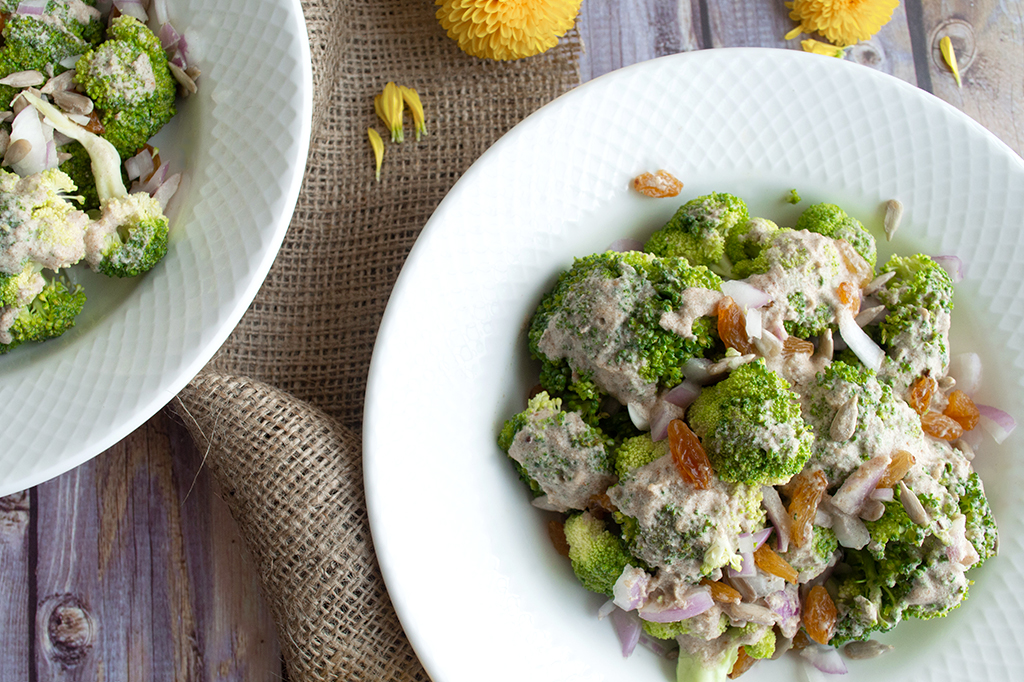
This delicious salad has calcium rich broccoli and omega 3 sunflower seeds. It is one of our favourite salads too and can be a meal by itself
KEY INGREDIENTS
Broccoli Salad:
- 5 cups broccoli florets
- 1/2 cup sunflower seeds
- 1/4 chopped red or sweet onion
- 1/2 cup cup raisins
Dressing:
- 1/2 cup cashews, soaked and drained
- 2 dates
- 1 tbsp apple cider vinegar
- 1/8 tsp sea salt
- 6 tbsp water
Nandini Shah was already a vegetarian, and a mother. She was worried about cutting out dairy because she thought it provided vegetarians with calcium or proteins. But she was surprised how she felt better by changing her diet, and how without counting calories she could lose weight.
“If you make it colorful, you can entice your children as well. Its amazing what a plant based diet can do!”
1. Can Vegans Be Top Athletes?
If top athletes get all their nutrition from a vegan diet, anyone can. You don’t have to worry about anything except vitamins B12 and D which everyone needs worry about.
2. Uprooting the leading causes of Disease – by Dr Michael Gregor
Famous Bollywood Actor Amir Khan switched to a plant based diet after watching this video