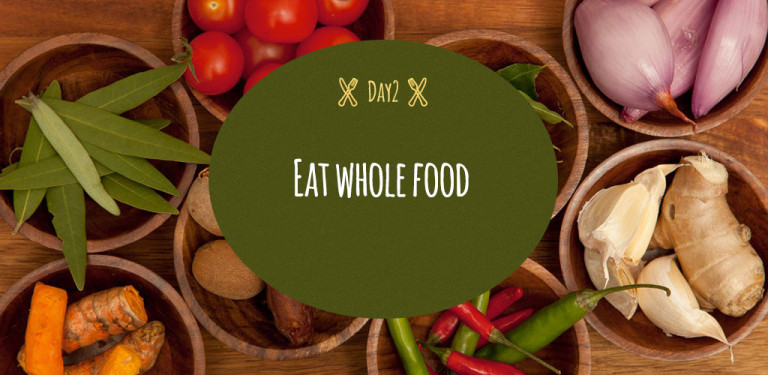
Today you will learn about the importance of eating whole foods, or unrefined foods. In addition, you will learn how to cook a typical Indian meal without oil, oil-free alternatives to your favorite fried food, and whole rice.
Importance of fibre
Human beings are the only animals on the planet who systematically make their food less nutritious! Maximum nutrients are found just under the skin of the vegetables, fruits or grains. When food is peeled and refined, it loses a lot of nutrients in addition to the beneficial fibre. Fibre helps to regulate the release of glucose in your bloodstream. When fibre is missing from your food, you can have unwanted spikes in your blood sugar level. In addition, whole food is more nutritious and filling, so eating whole food tends to make people eat less and get more nutrients per calorie.
Watch this video by Dr. Nandita Shah to learn how eating whole food can make you feel full longer and eat less.
Key Points
- Retain the fibre in your food by eating it whole, which helps lower your blood sugar level, reduce your cholesterol level, and thin your blood so that you no longer need to take blood thinners.
- Don’t peel fruit and vegetables that you can’t peel with your bare hands. Avoid common refined products like sugar, white flour, white rice, oil, processed food, and other animal-based fats.
- Sweeten any dish with dried fruit such as dates or raisins instead of honey, which is not a whole food as it does not have any fibre.
Oil-free cooking techniques
To make this programme work for you, it is important that your food is delicious—only then will it be sustainable. Take some time to look after and prepare food for yourself. Alternatively, you can teach someone to cook for you. If your food is not delicious, you may be tempted constantly to go back to the previous lifestyle that got you sick. Because so many people around you are living in the old way, its important to be careful.
Use these revisions to some common cooking techniques that use oil so that you can convert your own favourite recipes into oil-free, whole, and healthy dishes.
- Steaming: Steaming is a good way to cook vegetables, especially vegetables without gravy. You can add flavour by steaming vegetables in vegetable broth. Steaming is also part of the cooking technique for items that you would usually fry (e.g., vegetable burgers, wadas, and pakoras).
- Frying onions: You can fry chopped onions by cooking them in a steel or ceramic pan with a little salt to release some water. Incase they do stick, which is rare, a few drops of water can be added to release them.
- Tempering: To temper, heat the vessel, add the larger items first (e.g., daals, mustard seeds, and cumin seeds), turn of the flame, and then add powdered spices and dry roast them so that they don’t burn.
- Adding flavour: You can enhance the flavour of any dish by adding whole or crushed nuts and seeds (e.g., grated coconut, roasted and crushed peanuts, sesame seeds, almonds, or cashews).
- Baking: Most of your favourite fried items like samosas, bhajjias, and pakoras can be baked instead of frying. Bake in a conventional oven, not microwave. Some microwaves can be used as convection ovens too. Or you can use an air fryer if you have one.
Frequently asked questions
Get answers to frequently asked questions about whole food.
Can I eat honey?
Honey is not only an animal-based product, it is also not a whole food as it does not contain any fibre. Therefore, you should avoid honey. You should avoid sugar and jaggery for the same reason. You can use dried fruit such as dates or raisins to sweeten any dish. We will show you how to sweeten your food next week.
Can I use artificial sweeteners?
You should avoid artificial sweeteners because they can be toxic and do not help control blood sugar. Some of them even promote diabetes!
Can I use Stevia since it is a natural sweetener?
You should avoid all added sweeteners besides dried, unsweetened fruit like raisins and dates—including Stevia—because using any sweetener raises your sweet threshold. Once you clean your palate and your sweet threshold comes down, anything with added artificial sweeteners or sugar should taste too sweet and you will not be tempted in the same way. In addition, you will begin to taste the sweetness in vegetables like carrots, peas, and even onions.
If I don’t peel fruit and vegetables, what about all the pesticides on the skin?
Unfortunately, pesticides are not only skin-deep—they penetrate right to the core of plants. So peeling fruit and vegetables does not mean that you are avoiding pesticides. The best way to avoid pesticides is to buy organic food. We’ll be covering more about organic food in week three. And, of course, you’ll want to avoid milk and other animal products, which can have hundreds of times more pesticides than plants because of all that the animal has eaten is in his or her system.
I don’t like whole rice. Can I have white rice or wheat instead?
Initially, many people do not like whole rice. Start with brown rice and learn to cook it properly. In time you should find it tastier than white rice which actually does not have much taste at all. You should favour brown rice or millet over wheat because wheat has been noted to spike blood sugar levels in patients (see for yourself).
Yesterday you switched to a whole food, plant-based diet—congratulations on taking this important step for your health! Today you’ll learn how to cook without oil, oil-free alternatives to your favorite fried food, and cooking whole rice.
Making a dry Indian vegetable dish without oil
Watch this video by Dr. Nandita Shah to learn how to cook a typical Indian meal of dry vegetables and daal with gravy—without oil. This video shows you the technique, which you can adapt to your own recipe.
Curried vegetable / daal with zero oil
KEY INGREDIENTS
Dry Mixed Vegetable (poriyal):
- 1 cup chopped green beans & carrots (or vegetables of your choice)
- 1 tablespoon split chana daal
- 1 tablespoon split urad daa
- 1 teaspoon mustard seeds
- Dry spices such as pinch of hing (asafetida), pinch of chili powder or to taste, pinch of turmeric powder, and 1 teaspoon coriander powder
- 2 broken, dried red chilies or ginger chilly paste
- 2 tablespoons freshly-grated coconut/roasted, crushed peanuts/ roasted, crushed sesame seeds as per your choice
Daal with Gravy:
- 1 teaspoon jeera (cumin) seeds
- Pinch of hing (asofatida)
- 1 cup chopped onions
- Salt to taste
- ½ teaspoon finely-chopped garlic
- ½ cup chopped tomatoes
- 1 teaspoon finely-chopped or grated ginger
- 4–5 curry leaves
- ½ teaspoon finely-chopped green chilies or to taste
- ¼ teaspoon turmeric powder
- Red chili powder to taste
- 1 cup cooked daal
- ½ cup water or to desired consistency
Fried snacks alternatives
Watch this video by Dr. Nandita Shah to learn how to prepare oil-free bhajjias, pakoras, and samosas—delicious alternatives to fried snacks.
KEY INGREDIENTS
Bhajjis and Pakoras:
- 1 cup sliced onions
- ½ teaspoon salt or to taste
- ½ cup besan (chickpea) flour
- ½ teaspoon turmeric powder
- ½ teaspoon red chili powder or to taste
- 1 tablespoon chopped coriander
- ½ teaspoon finely-chopped green chilies or to taste
- 1 teaspoon roasted coriander seeds
Samosas:
- 1 ½ cups whole-wheat flour (atta)
- ½ teaspoon salt or to taste
- ½ teaspoon ajwain seeds
- 1 cup cooked potato subzi of your choice
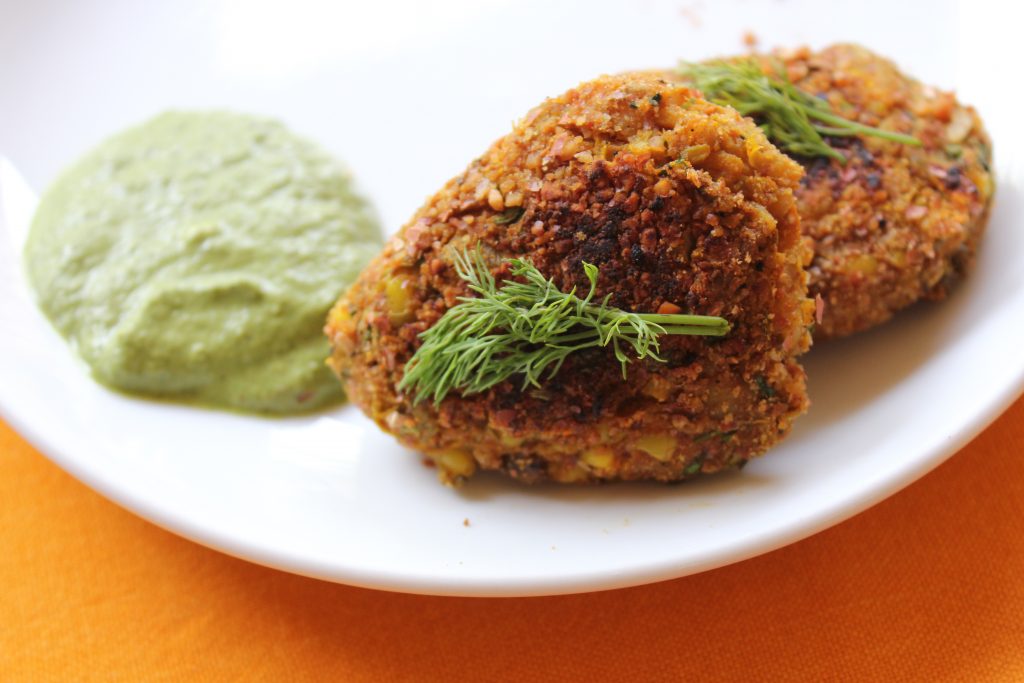
Learn how to prepare oil-free Vegetable Cutlets—a delicious alternative to cutlets fried in oil.
KEY INGREDIENTS
Oil-free Vegetable Cutlets:
- 8 medium, unpeeled potatoes
- 200 grams unpeeled carrots
- 200 grams French green beans
- 2 finely-chopped onions
- ½ cup finely-chopped coriander
- ½ cup finely-chopped mint
- Ginger chili paste to taste
- Salt to taste
- Lime juice to taste
- Peanut powder to taste
White rice alternatives
Watch this video by Dr. Nandita Shah to learn how to cook whole brown and red rice—delicious alternatives to white rice.
Tip: If you soak the rice in the required amount of water after washing it, for 2 – 4 hours, the cooking time reduces considerably.
KEY INGREDIENTS
Brown rice/Red rice:
- 1 cup whole, unpolished rice (red, black, or brown)
- 2 ½ cups water
Ritu Sharma was used to eating white rice and some sugar or sweet after every meal and biscuits for snacks. She felt she would not be able to do without it. After 21 days of eating whole rice and oil free, she feels it’s not as difficult as she thought it would be and does feel she could do it.
“THIS COOKING IS SUITING ME; I THOUGHT I WOULD NOT BE ABLE TO MANAGE, BUT AM REALLY NOT MISSING THOSE THINGS.”
Film – Forks Over Knives
Examines the profound claim that most, if not all, of the degenerative diseases that afflict us can be controlled, or even reversed, by rejecting our present menu of animal-based and processed foods
Buy full movie here