Stock your kitchen
Today you will continue to learn about the important changes that you need to make in your kitchen. While yesterday was mostly about what you need to remove from your kitchen, today we’ll be covering what you need to buy and stock in your kitchen.
Kitchen equipment and tools
To prepare for the 21 days ahead, you need to make sure you have the necessary tools and equipment to cook and eat delicious food.
Watch this video by Dr. Nandita Shah to learn what you need to obtain for your kitchen.
Key Points
- Obtain a steamer or use a steel colander or sieve.
- If you eat lunch at work, obtain a quality lunch box for cold and hot dishes together.
- Favor good quality steel, iron, copper, glass, brass, or earthenware utensils.
- As much as possible, avoid storing your food in plastic containers and cooking your food in microwaves, aluminium vessels, and non-stick cookware.
Download Kitchen Replacement Chart HERE
Essential kitchen equipment
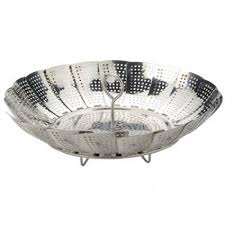
- Steamer: A steamer is an important tool for quick and oil-free cooking. It also retains more nutrients in your food—you will be using it a lot! You can buy any stainless steel steamer that is available in the market. View a commonly available sample steamer above. You can also use a stainless steel colander or sieve propped over a katori inside a pot.
- Blender/mixer/grinder (mixie): A mixie is essential for making smoothies, nut butter, chutney, plant-based milk and cheese, etc. It is usually one machine with different-sized jar options.
Optional kitchen equipment

- Food processor: You may want to obtain a food processor, which is usually a round jar with S-shaped and other blades that is useful for chopping, rough grinding, grating vegetables, and making fruity ice cream and nutty desserts.
- Oven: You may want to obtain a convection (not microwave) oven toaster grill (OTG) or a larger convection oven for baking alternatives to fried food, etc.
- Pressure cooker: If you’re often short on time, you may want to obtain a stainless steel pressure cooker to speed up cooking times, especially for lentils and beans.
- Air fryer: If you have a weakness for fried food, an air fryer makes oil-free, crispy snacks such as pakoras, French fries, and cutlets! See a picture of a sample air fryer above.
- Lunch box/tiffin: Until you are more familiar with a whole food, plant-based diet and your blood sugar level is under control, we recommend that you avoid eating out. If you work outside the home, you may want to obtain a stainless steel lunch box or tiffin carrier to carry food to work with you.
Sample shopping list
Whenever possible, favor fresh, seasonal, organic food. View city directories for a list of organic stores in your city that may stock some of the items new to you. If your city is not listed, an internet search for organic stores may yield results. You can also view a list of online organic stores that deliver across India. We’ll cover why you should favor organic food in greater detail in week three.
Before you go shopping, make a list of all the whole food, plant-based replacement options from the suggested replacements table that interest you and that you would like to explore in your neighborhood. A sample shopping list to get you started may look like the following:
- Whole, unpolished brown or red rice poha
- Other whole, unpolished grains such as barley, oats, and millet (foxtail, sorghum, amaranth, buckwheat, barnyard, pearl, finger, etc.) and flour made from these grains
- Whole wheat flour (atta), which has all the fibre (bran) or chokar intact (nothing added or removed from wheat grain)
- A variety of whole beans and lentils/daals of your choice
- Lots of fresh, seasonal fruit and vegetables of your choice
- Peanuts and nuts such as coconut, almonds, walnuts, pistachios, and cashews
- Sunflower, sesame, flax, and other seeds
- Unsweetened dried fruit such as dates, raisins, unsulfured apricots, and figs
- Rock salt or sea salt
For specific ideas about breakfast, lunch, dinner, snacks, and desserts, view the sample menu plan, online recipes, and recipe booklet.
Frequently asked questions
Get answers to frequently asked questions about preparing a whole food, plant-based diet.
What if my family won’t be following the diet?
If other family members will not be trying the diet with you, you would need to separate your food and make sure that it’s not mixed with food that you want to avoid in this period.
What if I don’t cook/how do I train the maid?
If someone else cooks for you, you will need to involve them in learning the methods of cooking for this programme.
What if I cook for others?
Everyone can enjoy this kind of food. You need not tell them that it’s something special—you need only make it delicious!
What if I can’t finish the programme in 21 days?
The SHARAN 21-day Online Diabetes Reversal Programme was designed so that you’ll know all of the elements to reverse diabetes by the end of the 21 days. It’s okay if you delay finishing the programme because you’re still doing better than you were before. However, it will delay the final results.
Suvarna from Hyderabad was a diabetic for the last 12 years. She was on 75 units of insulin and medications despite of which HbA1c was 10.2 . She changed her diet. The HbA1c is 7.1 despite stopping insulin. She is enjoying mangoes and other fruits and other things that she missed for so many years!
“I made small goals to change my kitchen”
Tackling diabetes with a bold new dietary approach
Currently 100 million Americans are pre-diabetic or diabetic, and one in three kids born after the year 2000 will develop diabetes. Neal Barnard, clinical researcher and founder of the Physicians Committee for Responsible Medicine (PCRM), identifies the causes of this serious issue and advises us how we can fight these statistics.